
Railway measurement and diagnostics
RWVLM Online Measurement and Monitoring
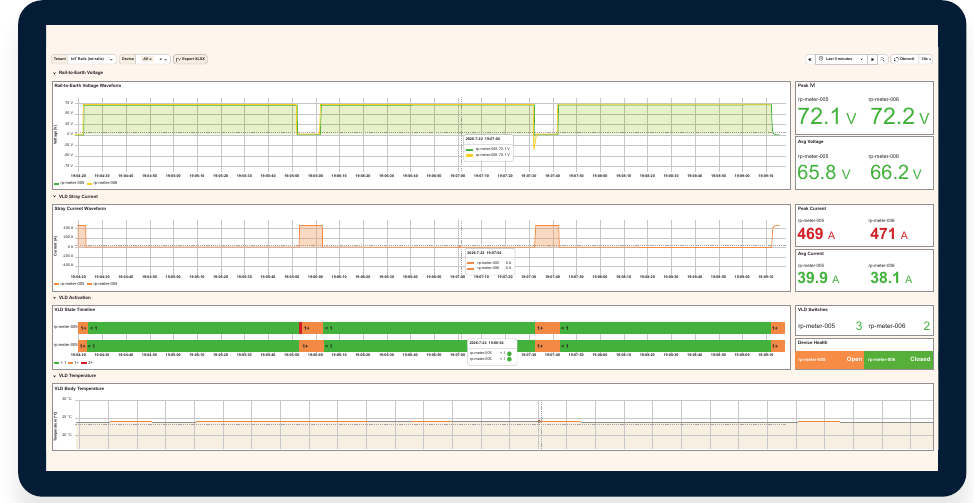
Understand rail-to-earth voltage, current through the VLD and device status under real operating conditions. RWVLM brings continuous measurement, event analysis and fault notifications into one online monitoring environment.
Monitor multiple locations, identify the affected device when a fault occurs and plan a targeted maintenance response.
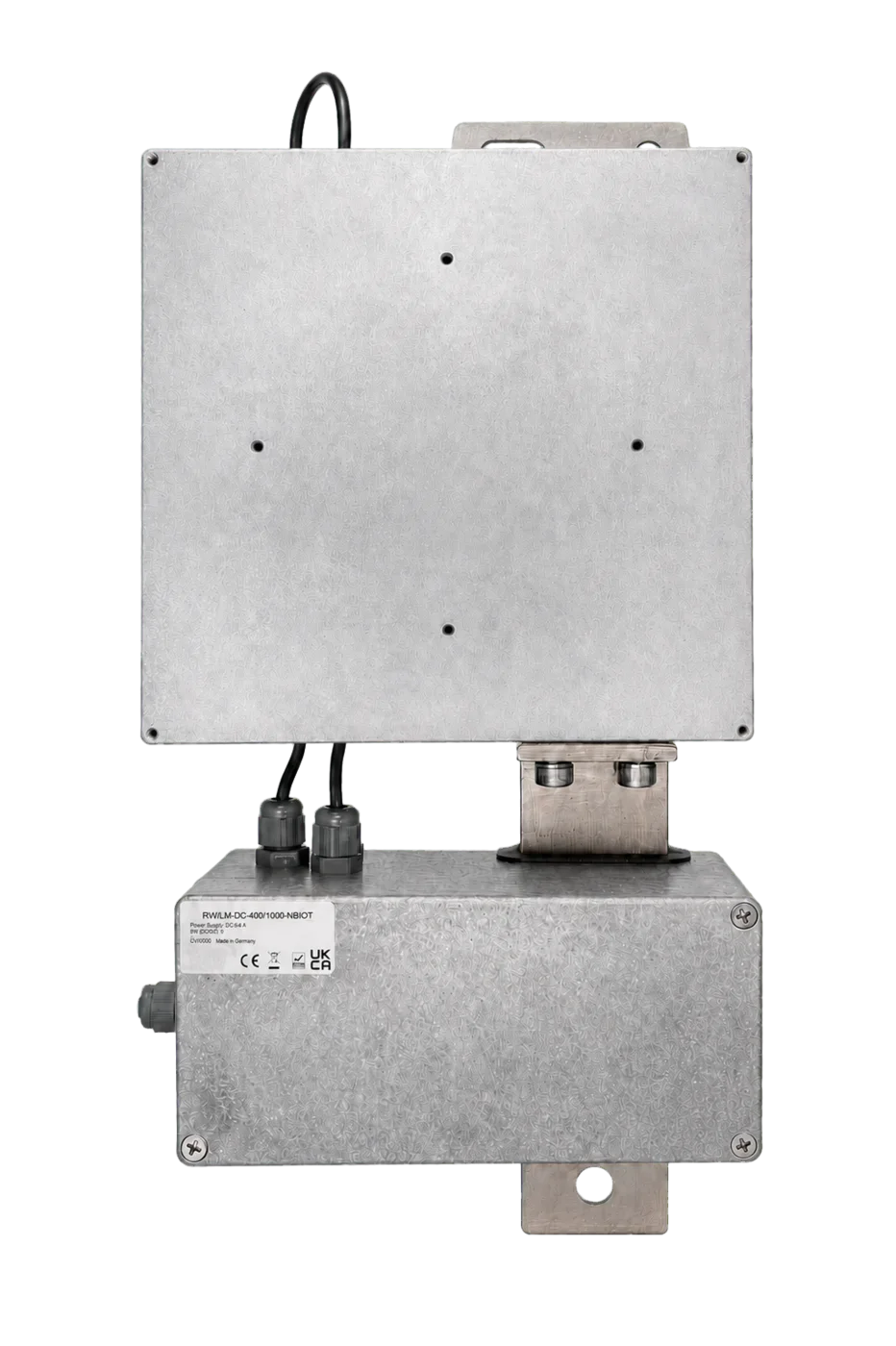
- Voltage measurement
- ±400 V DC
- Current measurement
- ±1000 A DC
- Sampling interval
- 1 second
- Communication
- LTE-M / NB-IoT
See what is happening along the railway
Voltage and current
Observe rail-to-earth voltage and current through the connected VLD. Review average and peak values, trends and recorded events.
VLD status and faults
Evaluate active, off and failure states. When a monitored fault is registered, receive immediate email, SMS and system alerts.
Multiple locations
Compare measurement points within one monitoring environment. Use historical data and customer-defined analyses to plan maintenance.
From fault detection to targeted maintenance
- Measure continuously. Record voltage and current at one-second intervals and evaluate monitored device states.
- Identify the fault. The alert identifies the affected VLD so the maintenance team can respond to the right installation.
- Act on the affected device. Targeted replacement shortens the time a failed VLD remains conductive, helping minimise stray-current exposure and associated corrosion risk.
For the VLD status functions covered by the system, continuous automated evaluation replaces scheduled manual status inspections. Installation, commissioning and work on the electrical infrastructure remain part of the maintenance process.
Configure RWVLM for your installation
VLD compatibility
Integrate RWVLM with RW VLDs or compatible VLDs from other manufacturers, based on the device interfaces and installation conditions.
Power and connectivity
The unit uses 5 V DC power and LTE-M / NB-IoT communication. Optional AC/DC and solar supplies support different installation locations.
FT version
The RWVLM-DC400/1000-NBIOT-FT variant adds the optional forced-tripping function for compatible class 2 VLD installations.
Technical data
On smaller screens, scroll the table horizontally to compare both variants.
| Parameter | RWVLM-DC400/1000-NBIOT | RWVLM-DC400/1000-NBIOT-FT |
|---|---|---|
| Voltage measurement range | ±400 V DC | ±400 V DC |
| Current measurement range | ±1000 A DC | ±1000 A DC |
| Measurement inaccuracy | <2% with suppressed zero | <2% with suppressed zero |
| Sampling interval | 1 s | 1 s |
| Data transmission | LTE-M (NB-IoT) | LTE-M (NB-IoT) |
| Power supply | 5 V DC | 5 V DC |
| Power consumption, average / peak | <2 W / 8 W | <2 W / 10 W |
| Rail-to-measurement circuit isolation | 3 kV DC | 3 kV DC |
| Ingress protection | IP68 | IP68 |
| Operating temperature | −40 to +80 °C | −40 to +80 °C |
| Dimensions | 19 × 17 × 6 cm | 19 × 17 × 8 cm |
| Weight | 1 kg | 1.2 kg |
| Server data storage | Up to 10 years | Up to 10 years |
| Tripping current | Not applicable | 20–80 A |
| Tripping lifetime | Not applicable | >100,000 cycles |
| Ordering number | RWVLM_DC_400 | RWVLM_DC_400_FT |
Optional RWPS-5/2 power supply: 85–305 V AC (47–440 Hz) or 120–430 V DC input; 5 V DC / 10 W output; IP68. Ordering number: RWPS_5_2.
Application questions
Can RWVLM monitor VLDs from another manufacturer?
Yes, RWVLM can be integrated with compatible third-party VLDs. The suitable configuration depends on the device interfaces and installation conditions.
How does monitoring help reduce corrosion risk?
A failed VLD can remain conductive until it is found and replaced. Immediate fault identification enables targeted replacement, reducing the duration of unwanted current flow and the associated corrosion risk.
What happens when a fault is detected?
When the system registers a monitored fault, it identifies the affected device and sends an immediate notification by email, SMS and within the monitoring platform.
What does the FT version add?
The FT variant provides the optional forced-tripping function for compatible class 2 VLD installations. Its specified tripping-current range is 20–80 A, with a lifetime above 100,000 cycles.